“There is a need to improve Teacher Development through Digital Skills and Open Learning Opportunities in Africa”, Minister of Education, Dr. Valentine says
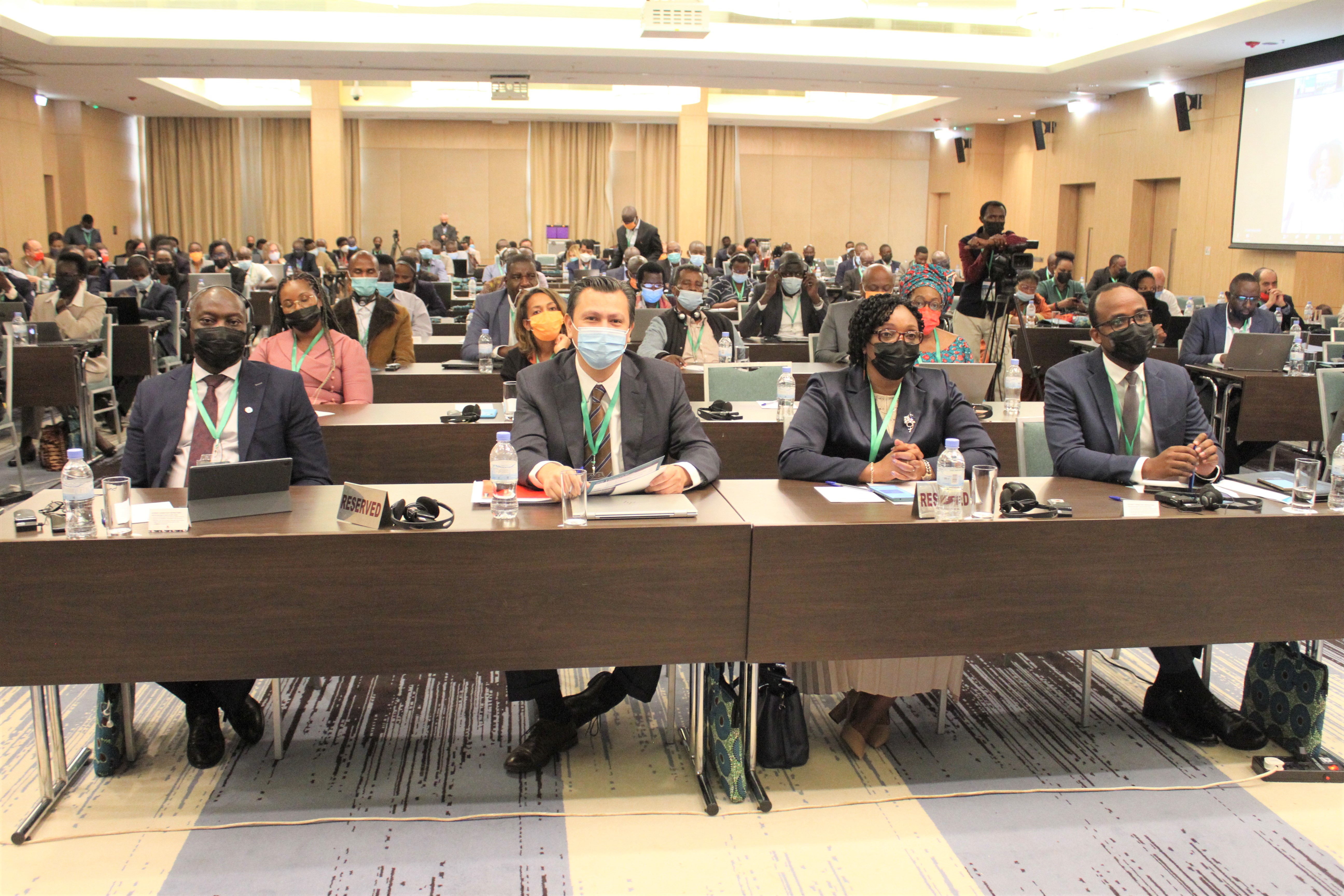
2 December 2021, Minister of Education, Dr. Valentine UWAMARIYA officially opened the 13th Policy Dialogue Forum of the International Task Force on Teachers for Education 2030 (TTF). In her remarks says that the 13th Policy Dialogue Forum is unique opportunity for considering the questions that are repeatedly asked about teachers and their profession.
She also noted the role of teachers, “I am sure everyone here is only too aware of the person who used to work tirelessly, spending many hours to fill the gap of knowledge, skills and attitude we needed to take our place in the World. That person is the teacher to whom we dedicated this Policy Dialogue Forum.” She said
Minister of Education, Dr. Valentine UWAMARIYA mentioned that there is a responsibility of many stakeholders by responding to teachers’ questions. “responding to the question of teachers requires Governments, International Organizations and civil society members to work in synergy and find adequate solutions for teachers together. In this line, the Ministry of Education, in collaboration with partners, is in the process of establishing an African Centre for School Leadership, with the aim of supporting Governments in Africa to build capacity in promoting effective school leadership, for improved quality of teaching, and learning outcomes.” She added
She went further by adding that talking about teachers , one needs to talk about school leadership since the leadership is the key controller at school level, “any discussion involving the role of teachers needs to also examine the role of school leaders to enhance the quality of the teaching and learning process. Effective school leadership is key to leverage quality of education for better learning and more resilient education systems. Empowering school leaders and developing their capacities are key actions to allow them to establish systems that enable teachers to continuously improve their practice and galvanize the whole community to support students' hopes and dreams.” She emphasized
“The Ministry of Education in Rwanda has made great progress towards institutionalization of effective school leadership in basic education. A dedicated School Leadership and Management unit has been created and; through this unit, evidence-based professional standards for effective school leadership have been established, which describe the key roles, responsibilities, and required competencies to be an effective school leader. These standards now serve as a framework for recruitment, assessment, and professional development of school leaders.” She underlined
Minister of Education, Dr. Valentine UWAMARIYA mentioned that The SDG4 on quality education targets to substantially increase the supply of qualified teachers, including through international cooperation for teacher training in developing countries, especially least developed countries and small island developing states by 2030. “Now it is the right time to assess how ready we are to hit this target being aware of key challenges including those caused by the Covid-19 outbreak.” She said
During the forum, Minister of State in charge of Primary and Secondary Education, Gaspard TWAGIRAYEZU shared the experience of education in Rwanda during the schools’ closure. “during that critical period, we managed to use electronic and online platforms such as Radio, TV, SMS Bulk, YouTube channel, and eLearning platforms were used to make sure that the education does not stop going .” He said.
The Director General of the Rwanda Basic education Board, Dr. Nelson MBARUYSHIMANA concluded the break out session on “teacher development through digital skills and open learning opportunities in Africa” by thanking all participants for the insightful discussion. He proceeded to saluting the “candidat libre program” initiated in 1998 for its contribution towards creating opportunities for non formal teachers which helped more than 25 thousand teachers to upgrade,
He added on that such learning opportunities needs be be strengthened since it also gives learning opportunities to everyone. The DG REB said that with collaboration with partners formal learning materials were made accessible to non formal learners hence making them potential contributors towards the development. Dr. Nelson reminded that REB with partners such as UNESCO, VVOB etc developed digital competence for teachers to develop skills which are so critical for the preparedness for crisis such as the covid pandemic which no one was prepared for.
DG REB, Dr. Nelson MBARUSHIMANA again highlighted that REB with partners provided trainings to teachers and schools leaders which were done online; however, he noted that even though digital learning is being encouraged, digital devices are still trivalent in Africa and Rwanda is no exception.
To encourage the digital learning a new campaign was initiated and was named “one laptop per teacher” to help teachers get familiar with digital devices. And he reminded that at least 28,208 new teachers were recruited last year in the quest of the Rwandan government to generate a big number of qualified teachers to give a proper and accessible education program all around the country. “...Together we can formulate policies and strategies to achieve SDGs 4...” said Dr. Nelson.
He concluded on wishing a wonderful experience to all participants in the remaining sessions of the 13th policy dialogue forum.
The over-arching theme of this year’s policy dialogue forum is Innovation in teacher policy and practice for educational recovery with particular attention to innovation in:i)teaching and learning (ii)initial and in-service teacher education and (iii) education policy.
The PDF will generate recommendations and lessons learned that: Help teachers, school leaders and officials to foster innovations in teaching and learning; Improve teacher education by diagnosing gaps in teacher education curricula; integrating new collaborative, online and hybrid professional learning models; and aligning curricula with shifting teacher standards and teacher appraisal; Ensure critical, evidence-based appraisal of bottom-up and top-down and inter-disciplinary / cross-sectoral innovations to inform decisions about expanding their implementation; Foster innovation in new or revised policies on all aspects of teacher preparation and work – including recruitment;
The forum will also recommend on the preparation and professional development; deployment; remuneration; standards; accountability; employment and working conditions – with flexibility to allow for experimentation and local variation and Develop or revise teacher policy frameworks at national, sub-national and local levels through an open innovative inclusive approach, harnessing and building on existing social dialogue mechanisms.


