Rwanda Pilot Begins for Locally Developed EduConservation Teacher Toolkits to Strengthen Classroom-Based Environmental Education
16 November 2025, The Sabine Plattner African Charities (SPAC), in partnership with the Ministry of Education (MINEDUC) and the Rwanda Basic Education Board (REB), launched of a national pilot to strengthen classroom-based environmental education in Rwanda. The pilot officially begins with a series of training workshops for teachers and officials taking place from 15 to 23 November in the Bugesera and Karongi districts.
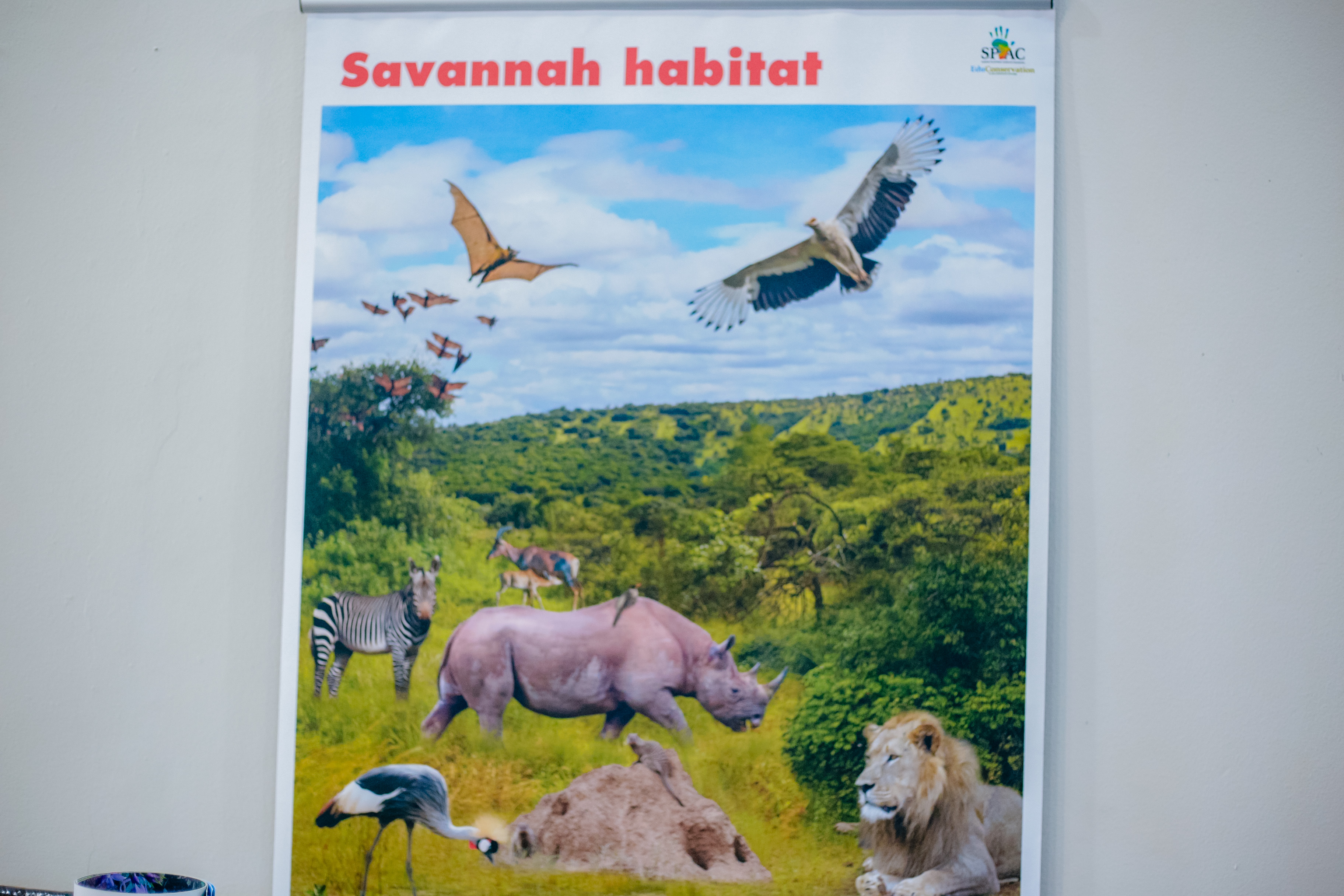
Building on the Memorandum of Understanding signed in August 2023, this pilot represents an important milestone in the SPAC–MINEDUC partnership. Through close collaboration with local experts and REB, the SPAC EduConservation programme has developed a suite of Primary School Teacher Toolkits that offer practical, classroom-ready, and locally relevant materials fully aligned with the Rwandan curriculum. These resources are designed to help teachers inspire in learners a deep appreciation for the natural world.
The pilot phase will introduce the Teacher Toolkits across 30 schools from 24 districts. Following this, an Expansion Phase will see the toolkits refined based on the results of a comprehensive evaluation and rolled out to an additional 120 schools nationwide. Updated materials will also be made freely available to educators through an online resource portal.
Mrs. Sabine Plattner, Founder of SPAC and Member of the Hasso Plattner Foundation Council, whose vision continues to guide the EduConservation programme, emphasises the urgency of environmental learning: “We have to understand the connectivity between nature and humans. Educating young people about the natural world is the most powerful tool we have in building a more conscious, compassionate, and sustainable future for the people of Africa.”
REB has played a central role in reviewing and aligning the Teacher Toolkits with national education priorities. Their technical guidance has ensured that the materials are both pedagogically robust and easily adaptable to diverse classroom contexts.
During the launch of the workshop at Lapalisse Hotel in Bugesera District, Director of Teacher training Unit, Mr. Gerard Murasira urged teachers to utilize the skills and knowledge gained in the workshop for the benefit of their students and nation at large, once they return to their respective schools.
More than 300 teachers and officials will take part in the training programme, which aims to strengthen teaching practices, build confidence, and promote learner-centred environmental education using the SPAC EduConservation Toolkits.
A SET teacher, Mukantagara Marie Gorette said: "We learned how environmental conservations lesson can be engaging to the students! Before, I was only using learning through play method, but now I am experiencing how to use visual aids such as cards, story books and photos.”
DoS at GS Mukarange cathorique, Mr. Habanabakize Theophile also noted that the workshop is helpful to teachers and Dean of Studies, and it will impact teaching and learning outcomes in as far as the environmental conservation is concerned. "We are sharpened on how best way to teach environmental conservation lessons, hence we believe that our students are going to understand their contribution to environmental conservation at early age." He noted.
The EduConservation programme is currently being piloted in six African countries—Rwanda, Republic of Congo, Gabon, Senegal, Morocco, and Namibia—underscoring the collaborative nature of the initiative and its commitment to advancing environmental responsibility through education.
In Rwanda, the programme reinforces the role of education as a strategic pillar in national conservation efforts and supports the country’s vision to nurture an environmentally conscious generation equipped to protect Rwanda’s rich biodiversity and natural heritage.


