Rwanda Basic Education Board Certified 7,500 Teachers in Digital Literacy to Strengthen Technology Integration in Classrooms
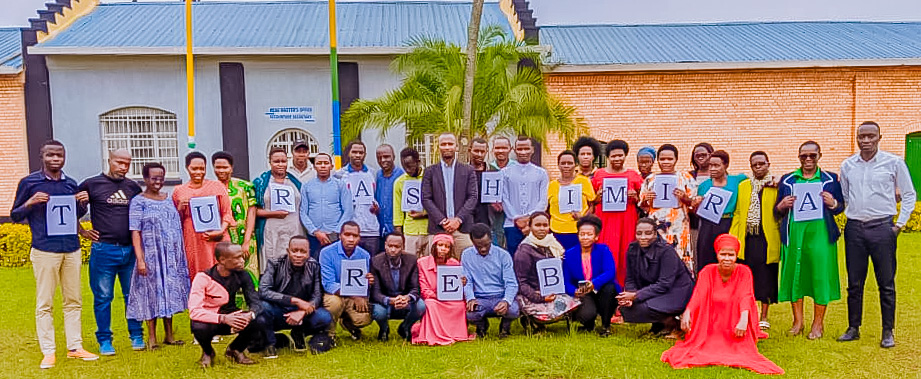
In line with the component on enhancing teacher effectiveness for improved student learning, the Rwanda Basic Education Board (REB), in collaboration with development partners, trained and equipped pre-primary, primary, and lower secondary school teachers with digital literacy skills. The initiative empowered teachers to use technology effectively in the classroom and enabled them to proficiently utilize ICT in education available at their disposal.
The training was conducted under the World Bank-supported project, Rwanda’s Quality Basic Education for Human Capital Development, which aims to improve teacher competency, student retention, and learning outcomes in basic education across the country.
Through the sixth rollout of the program, REB successfully trained and certified 50,539 teachers using a blended approach that combined face-to-face and online learning.
The latest phase of the training was conducted from 22 December 2025 to 22 February 2026, during which 7,500 teachers were trained and awarded the Microsoft Innovative Educator (MIE) certification. This milestone brought the cumulative number of trained and certified teachers under the program to 50,539.
During the 2025–2026 training cycle, a total of 7,500 teachers were trained and certified under the program. Of these, 30 percent were from pre-primary schools, 50 percent from primary schools, and 20 percent from lower secondary schools. In particular, 6,000 primary school teachers and 1,500 lower secondary school teachers participated in the training. Upon successful completion, all participants were awarded the Microsoft Innovative Educator (MIE) certification, recognizing their competence in integrating digital technologies into teaching and learning.
Comprehensive Training Content
The program covered a wide range of digital competencies designed to strengthen classroom practice and innovation. The key areas of focus included:
Introduction to educational technology and digital literacy
Navigation of the REB eLearning platform
Introduction to emerging technologies such as Artificial Intelligence (AI), Robotics, and Virtual Reality (VR)
Office 365 applications
Digital communication skills for educators
Through these modules, teachers gained practical skills in lesson preparation, interactive teaching, assessment, and digital communication with learners and colleagues.
Through the Digital Literacy Program, REB has trained more than 50,539 nursery, primary, and lower secondary school teachers across the country. As a result, teachers have acquired foundational ICT skills that are transforming teaching and learning in classrooms.
With these skills, teachers are now able to prepare lesson plans and assessments more efficiently, use AI-powered tools to support instruction, access and download learning materials from the REB eLearning platform, and utilize Microsoft 365 applications; such as Forms; for classroom assessment and learner engagement. All trained teachers have also earned international certification as Microsoft Innovative Educators (MIE), recognizing their competence in integrating technology into education.
This initiative has strengthened teachers’ confidence, enhanced the quality of lesson delivery, and contributed to improved learning outcomes. REB remains committed to continuously equipping educators with relevant digital competencies to ensure inclusive, innovative, and high-quality education for every child in Rwanda.
Meaningful digital transformation in schools requires more than simply providing devices. Equipping teachers with the knowledge and confidence to integrate technology effectively ensures that digital tools enhance student engagement and improve learning outcomes.
Primary school teachers who completed the training described the experience as transformative:
“Before this program, we used digital tools mainly for typing exams and notes. Now, we confidently use the REB eLearning platform, integrate Office 365 tools in my lessons, and explore emerging technologies to make learning more engaging as well as generating Lesson Plans with the use of Artificial Intelligence.”
Trainees and trainers witness the importance of the training:
Trainee DUSHIMIRIMANA Fidel said that he can now explore the required software and use digital resources to improve lesson delivery.
“When I came for the Digital Literacy training organized by the Rwanda Basic Education Board (REB), I was not fully skilled in using a computer. In fact, I only knew a few basic things, and I was not confident enough to use technology in my classroom. I used to rely entirely on traditional methods because I did not know how to explore digital tools properly.
Throughout the training, I gained practical ICT skills that have completely changed my teaching approach. I learned how to prepare lesson plans and assessments using a computer, use Microsoft 365 tools such as Forms for evaluating learners, and access quality teaching materials from the REB eLearning platform. I was also introduced to AI-supported tools that help me make my lessons more interactive and engaging.
Receiving the Microsoft Innovative Educator (MIE) international certification was a proud moment for me. It strengthened my confidence and motivated me to integrate technology into my daily teaching. Today, I can confidently explore the required software and use digital resources to improve lesson delivery.”
NYIRANDAYIRAMIJE Valentine, a trainee from EP KIRINGA, BUTARO Sector, in BURERA District noted that the digital literacy skills acquired through the training will not only improve classroom practices but also support everyday life activities. She explained that the knowledge gained helps her prepare lessons more efficiently using digital tools, organize assessments, and access online teaching resources with ease. Beyond teaching, she added that the skills are equally valuable in her personal life, especially in managing small business activities such as record keeping, communication, and online transactions, demonstrating how digital literacy contributes both to professional growth and economic empowerment.
Trainer NIRAGIRE ATHUMANI shared his emotions after completeing training. “As trainers in the Digital Literacy Program initiated and implemented by the Rwanda Basic Education Board (REB), we have witnessed remarkable progress among teachers who attended the training. Many trainees joined the program with limited digital skills, while some had never confidently used a computer before.
Throughout the training sessions, teachers acquired essential ICT competencies that enable them to integrate technology into teaching and learning. Today, trainees are able to prepare digital lesson plans, design classroom assessments using Microsoft 365 tools such as Forms, access learning materials from the REB eLearning platform, and effectively use AI-supported educational tools.
After training, teachers are no longer hesitant to use technology; instead, they actively explore software and digital resources that enhance learner engagement and improve lesson delivery. The Microsoft Innovative Educator (MIE) certification they receive also motivates them to continue applying digital skills professionally.
We can confidently say that teachers who completed this training are now equipped with practical digital literacy skills that support modern, learner-centered education and contribute to improved learning outcomes in Rwandan classrooms.”
With the completion of this sixth cohort, REB reaffirmed its commitment to building a digitally competent teaching workforce capable of preparing learners for the demands of a rapidly evolving, technology-driven world.
End