EDUCATION IN RWANDA CONTINUES TO SERVE AS FOREFRONT DRIVER OF SUSTAINABLE CHANGE
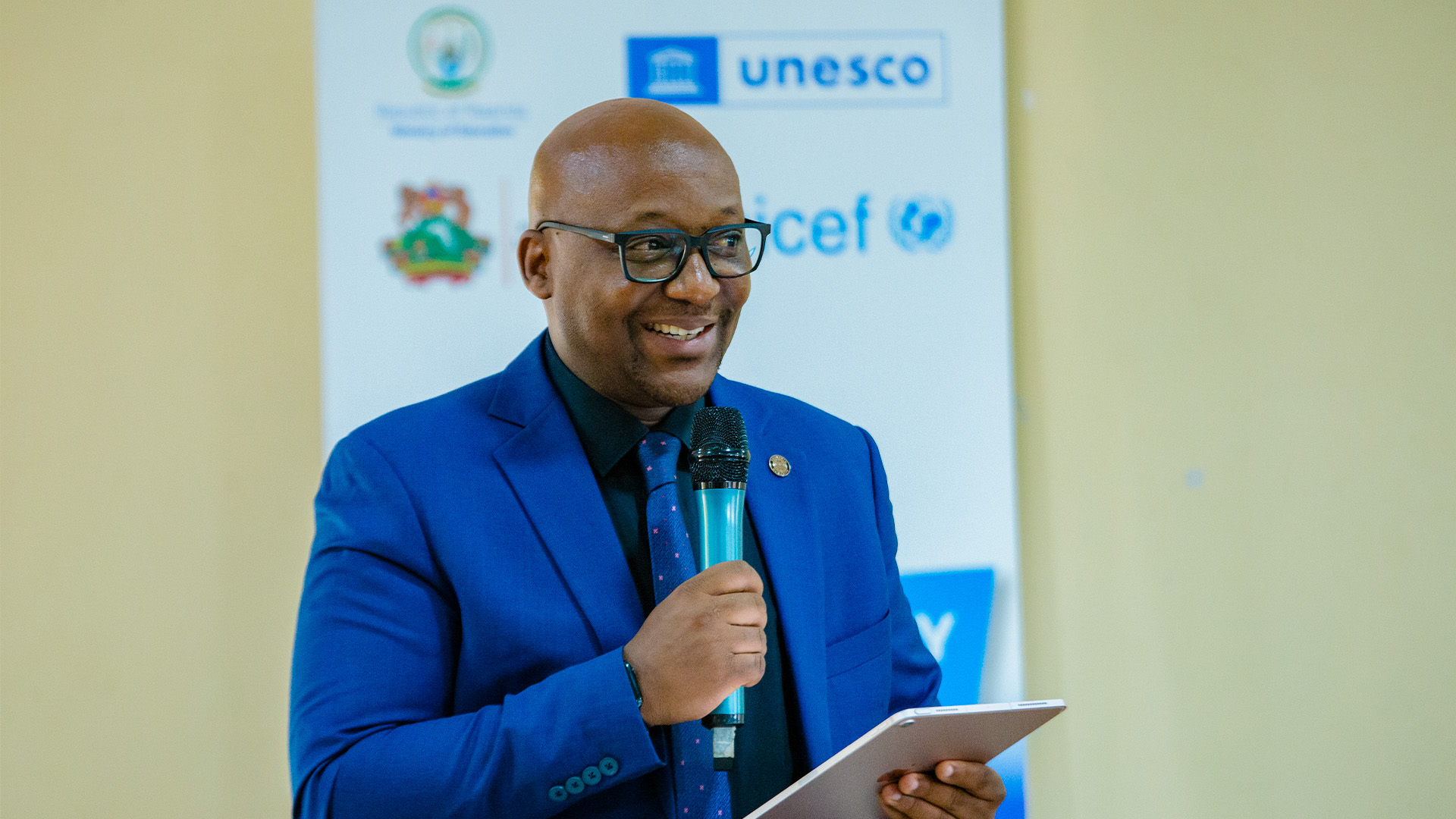
On 2 October 2025, at the Rwanda Education Board (REB), the Director General, Dr. MBARUSHIMANA Nelson, delivered his opening remarks during the Leadership for Education for Sustainable Development (LEAD-ESD) National Policy Dialogue and Workshop on Education for Sustainable Development in Eastern Africa (Rwanda).
The event was organized by national coordinators from the respective countries and supported by the implementing partner and focal person from Kenyatta University, with funding and technical assistance from UNESCO and UNICEF.
The LEAD-ESD aims at transforming teacher education and TVET systems across Eastern Africa by equipping educators, policymakers, and institutional leaders with the knowledge and tools to integrate ESD into curricula, pedagogy, and institutional practices.
In the workshop, Director General of Rwanda Basic Education Board (REB) Dr. MBARUSHIMANA Nelson shared his opening remarks to Leadership for Education for Sustainable Development (LEAD-ESD) National Policy Dialogue and workshop by welcoming all experts, policymakers, and educators from Eastern Africa. Dr. Nelson said that discussions will reflect on how education can drive climate action, green skills, and inclusive sustainable development for the future.
Dr. Nelson said: “Our goal is to prepare learners who are not only academically competent, but also responsible citizens capable of driving Rwanda’s Vision 2050. To achieve the ambitions of ESD, gaps in digital inclusion& capacity, and systematic transformation must be addressed.”
As REB, we stand Royality with all stakeholders’ representative to ensure that education in Rwanda continues to serve as forefront drivers of sustainable change. Together, let us commit ourselves to action that leaves no learner behind to ensure sustainable future for all. DG REB Dr. Nelson added
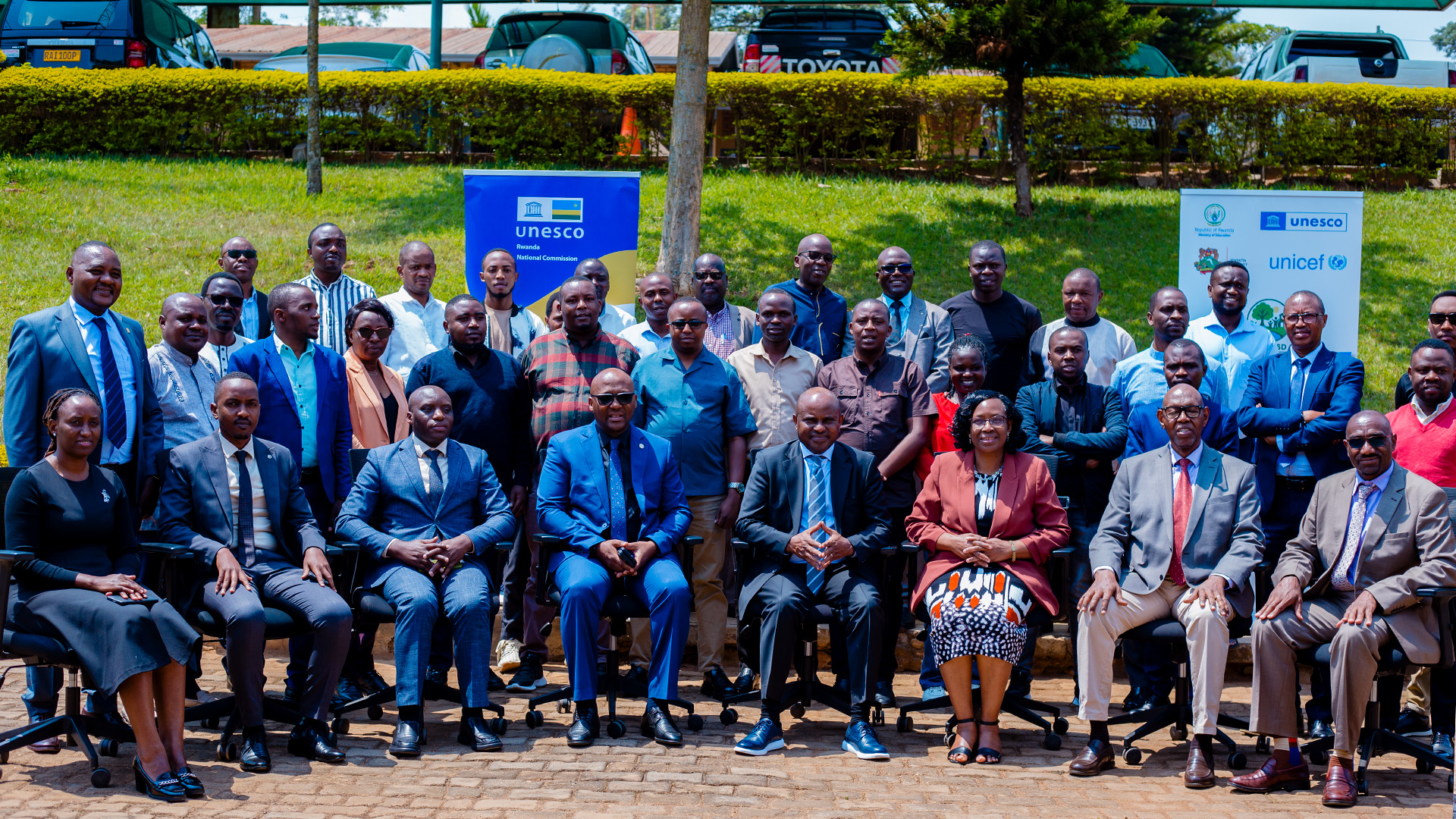
The workshop brought together not less than 20 from Rwanda and participating delegates experts (from ministries of Education, Environment, Science and Technology, Natural Resources, Culture, Agriculture, Academia, NGOs, representatives of youth, women and people living with disabilities etc.) working on ESD and Climate Change Education. Others include representatives of the LEAD-ESD program; members of the national ESD for 2030 country initiative working group; UN Agencies with projects related to ESD and Climate Change Education (CCE) and UNESCO and UNICEF staff from regional offices and the implementing partner, the Kenyatta University.
The presentations reflected on how the LEAD-ESD leads as a solution for Sustainable Development not only for African countries but also for the globe through education.
A key feature of LEAD-ESD is the Change Project approach, where participating institutions nominate teams to design and implement sustainability-focused projects that address real institutional challenges. These projects foster innovation, collaboration, and leadership in embedding ESD principles into education systems.
Ket problem statements
Eastern Africa is home to diverse ecosystems, cultures, and development contexts. Countries in the region—including Kenya, Uganda, Ethiopia, Rwanda, Tanzania and others including small island countries such as Seychelles—face pressing challenges such as climate change, youth unemployment, biodiversity loss, and unequal access to quality education. A focus on the four LEAD-ESD cohort countries for ESD, Kenya, Rwanda, Seychelles and Uganda, provide further insight into the urgency for intervention.
Seychelles faces acute climate change impacts such as rising sea levels and coral bleaching, threatening its biodiversity and coastal livelihoods. Youth unemployment and limited access to green technologies pose barriers to inclusive development, while efforts to mainstream climate education and sustainability into the education system are still evolving.
Rwanda is tackling climate change and biodiversity loss through youth-led conservation and green job initiatives. Despite progress, challenges persist in addressing youth unemployment, especially among NEET youth, individuals aged 15–24 who are Not in Employment, Education, or Training. This group is particularly vulnerable, as they are excluded from formal learning and economic participation, which can hinder their long-term development and social inclusion. NEET rates are notably higher among young women, and contributing factors include unpaid domestic work, early marriage, and limited access to vocational training and employment opportunities and integrating sustainability into education systems. The country is leveraging local leadership and nature-based solutions to build resilience.
Kenya grapples with climate-induced displacement, prolonged droughts, and biodiversity degradation, which directly affect food security and education. Youth are increasingly engaged in climate action and ecosystem restoration, but disparities in access to climate education and sustainable livelihoods remain significant.
Uganda’s youth face high unemployment and vulnerability to climate change, with challenges spanning biodiversity loss, waste management, and limited green job opportunities. National efforts are underway to empower youth through climate education, entrepreneurship, and capacity-building for sustainable development. These challenges demand transformative approaches to education that empower learners and educators to become agents of sustainable change.
Purpose of the National Policy Dialogue and workshop
This national dialogue aims to convene key stakeholders-government ministries, education leaders, civil society organizations, academia, and development partners - to:
Present a contextualize the LEAD-ESD program in relation to ESD for 2030 and national development goals, ensuring all participants understand its strategic relevance.
Review for validation, a national ESD progress through the presentation of the Policy Scoping Report, Country Uptake Report, and ESD Baseline Report to inform the development of a National Strategic Framework for ESD.
Identify synergies and opportunities across climate change education, environmental education, and green skills initiatives using the LEAD-ESD implementation progress report and the SDGs to validate topics for participants’ change projects.
Strengthen multisectoral partnerships and coordination by facilitating dialogue on resource mobilization and generating stakeholder inputs for regional reporting and alignment under the LEAD-ESD program.
The workshop was thoughtfully designed with clear objectives that guided every activity and discussion.
First, it aimed to strengthen national capacity for Education for Sustainable Development (ESD) by helping participants contextualize the LEAD-ESD program within the broader ESD for 2030 agenda and Rwanda’s national development goals. Through this, the expectation from the workshop is that attendees would be able to connect global commitments to local realities in education and sustainability.
Secondly, the workshop sought to validate national ESD progress by examining key reports that captured Rwanda’s achievements and challenges in implementing ESD initiatives. Participants could provide critical feedback to ensure that the findings accurately reflected the country’s position and direction.
The third objective focused on identifying priority themes for institutional Change Projects. Participants were to explore ideas and developed projects aligned with the Sustainable Development Goals (SDGs), ensuring that their initiatives would contribute directly to sustainable transformation within their institutions and communities.
Lastly, the workshop aimed to foster multisectoral partnerships and encourage stakeholder input to strengthen regional coordination and resource mobilization. This objective encourages collaboration among education leaders, policymakers, and partners, laying the groundwork for a united approach to advancing ESD in Rwanda and the region.
By the end of the LEAD-ESD workshop, the participants had gained a clear and shared understanding of the program’s purpose and direction. It was remarkable to observe how confidently they articulated the relevance of the LEAD-ESD initiative to the global Education for Sustainable Development (ESD) for 2030 framework and Rwanda’s national development goals.
During the plenary sessions, several attendees openly expressed how the program’s approach could help advance sustainability education and strengthen national priorities in education and environmental stewardship.
As discussions progressed, the group collectively agreed to review and validate the status of ESD in Rwanda. The identified key gaps and proposed practical solutions were shared, which were later captured in the Policy Scoping Report, the Country Uptake Report, and the ESD Baseline Report. Their contributions formed a solid foundation for drafting the upcoming National Strategic Framework for ESD, ensuring that it reflected both local realities and shared aspirations.
The workshop also served as a platform for participants to confirm their thematic priorities for Change Projects. Through group work and consultations, they identified synergies across climate change education, environmental education, and green skills development. Each of these themes aligned closely with the Sustainable Development Goals (SDGs) and the ongoing implementation of the LEAD-ESD program, reinforcing the sense of direction and collaboration among the attendees.